
TL;DR: Bitcoin is the first money that is genuinely scarce, borderless, and yours — if you hold the keys. This is a practical tour of why it matters, how to take part, and how to secure it.
I came to Bitcoin the way a lot of engineers do: skeptical. A currency with no issuer, no board, no building? It sounded like a toy. Then I read the whitepaper, ran a node, and watched the network keep perfect time for years without anyone in charge. What changed my mind wasn’t the price; it was realizing that Bitcoin solves a problem I’d spent my whole career working around: how do you trust a system you don’t control?
This article is a map, not a sales pitch. I’ll cover why Bitcoin exists, the ways you can participate, how it’s actually used, and (most importantly) the five layers of security, from paper claims you don’t really own all the way down to hardware wallets and split-secret backups.
| This is educational, not financial advice. I’m an engineer writing about how the technology works and how to use it safely. What you do with your money is your call. |
About ₿itcoin
The Problem With Banking
The modern banking system runs on trust in institutions, and that trust is repeatedly abused. Money is created out of nothing, inflation quietly taxes savers, and the people who control the rails can freeze, seize, or deny access to your funds for reasons that have nothing to do with you.
If you want to understand how that machinery was built, read The Creature from Jekyll Island. It traces the origins of the Federal Reserve and how central banking centralizes control over money. Once you see it, you can’t unsee it. The narrator for the audiobook is good, too.
Bitcoin is a response to all of this. As the saying goes, it’s money for enemies; money that works even between parties who don’t trust each other and can’t shut each other out. That’s not a flaw; it’s the entire point. A neutral monetary network doesn’t ask permission and doesn’t play favorites.
The need for that neutrality isn’t theoretical. In recent enforcement actions, roughly ~$1T of Iran’s stablecoin holdings were frozen by the U.S. Treasury under Operation Economic Fury. Whatever you think of the politics, the lesson is structural: stablecoins and custodial money can be frozen because someone controls them. Bitcoin held in your own custody cannot be frozen by a memo, because there’s no one to send the memo to.
That’s why I only half-joke when I say Bitcoin could help save the world: a form of money that no government or bank can debase or seize changes the balance of power between individuals and institutions.
What’s Built In, and What Isn’t
Three properties are baked into the protocol itself:
-
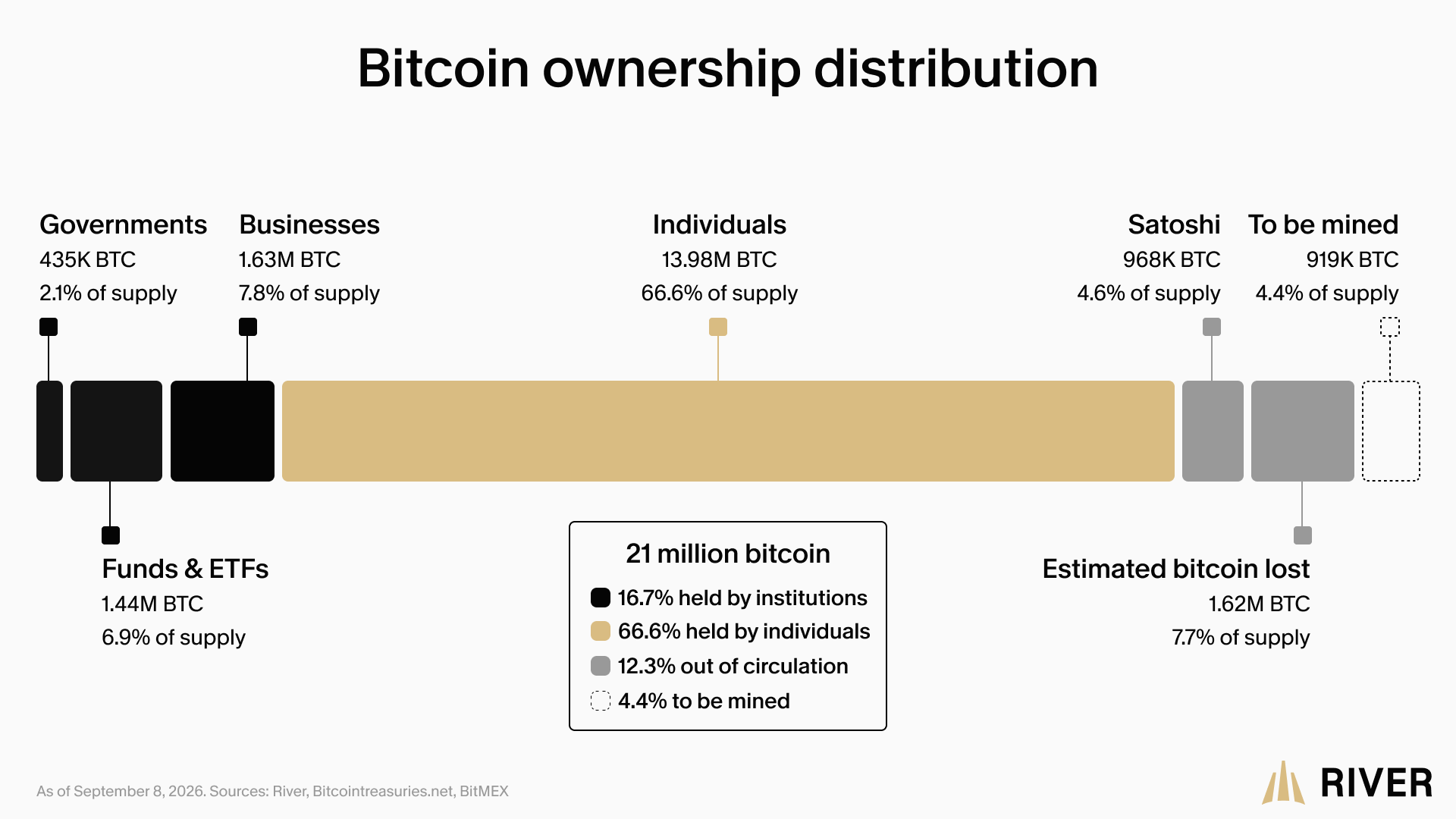
Scarcity is built in. There will only ever be 21 million bitcoin. No board can vote to print more. Scarcity isn’t a promise someone makes; it’s enforced by every node on the network, and you can verify it yourself.
-
Security is built in. The network is secured by proof-of-work and cryptography, not by a company’s goodwill. The ledger has never been successfully forged.
-
Privacy is NOT built in. This is the one everyone gets wrong. Bitcoin’s base layer is a public ledger: every transaction is visible forever. Bitcoin is pseudonymous, not anonymous. If you want privacy, you have to add it.
Layer 2: Private, Secure, Fast, and Cheap
The base chain is deliberately slow and transparent. That’s what makes it secure and auditable. Layer 2 (L2) networks build on top of it to add speed, low fees, and privacy without weakening the base. The Lightning Network, for example, lets you make instant, nearly free payments and settle to the main chain only when you choose, which also improves privacy by keeping individual payments off the public ledger.
The tradeoff to understand: L2s add convenience by introducing their own assumptions. That’s a reasonable trade for everyday spending. Just know which layer you’re on and why.
“But I Heard Bitcoin Got Hacked”
You’ll see scary headlines. Two recent ones are worth unpacking, because they illustrate an important distinction: the attacks were on software and services around Bitcoin, not on Bitcoin itself.
-
The collapse of FTX was more about corruption and scam than hacking. The problem remains the same: Exchanges can be hacked, or over-leveraged and you loose. Failures at the exchange level damage investor confidence and tend to drop the price of bitcoin, which usually results in the whole crypto market magnifying that drop in price. These failures don’t hurt you if you keep your coin off of the exchanges. I got my crypto off of FTX just days before the collapse. I lost some NFTs that I had minted myself, so I was only out a few dollars.
-
The ~$320M Liquid exploit hit a federated sidechain used by exchanges: a Layer 2 with its own trust model, not the Bitcoin base chain. The main network kept running exactly as designed. This is a case for understanding what layer your money sits on, not evidence that Bitcoin is broken.
-
The ColdCard attack that drained ~$89M from ~1,200 addresses was a supply-chain/user-targeting attack, not a break in hardware-wallet cryptography. Hardware wallets remain the gold standard for self-custody. The failure modes are counterfeit devices, tampered supply chains, and tricked users, which you defend against with good buying and signing hygiene (covered below).
The pattern: Bitcoin the protocol keeps working. The risk lives in the services, bridges, and human habits around it. That’s good news, because those are things you can control.
If I hold bitcoin and the price drops, doesn’t that hurt me?
No. It only hurts you if you were going to sell now, but if you hodl (hold), you will weather the storm, the price will eventually rise beyond what it was before the dip, and bitcoin is on sale, so that would be the time to buy more.
Participation
There’s no single “right” way to be in Bitcoin. You can engage at whatever depth fits your time and goals:
-
Hodl: Hold for the long term. The most common on-ramp, and historically the simplest strategy: buy, secure it properly, and don’t touch it.
-
Spend: Use it as money. Paying with Bitcoin keeps the network a currency and not just an asset.
-
Use: Explore what the ecosystem can do: Lightning payments, savings tools, yield strategies, and more.
-
Accept: If you run a business, accepting Bitcoin opens you to global customers and removes chargeback risk. Tools like Square make it approachable.
-
Mine: Contribute hashpower to secure the network and earn block rewards. Once an at-home hobby, now mostly industrial, but small-scale and heat-reuse mining is a growing niche. While industrial-scale mining operations and large pools tend to get the bulk of the block rewards, small, desktop miners regularly get block rewards, too.
-
Node: Run your own full node to verify the rules yourself. This is the purest form of participation: you stop trusting and start checking. “Don’t trust, verify” is only real if you’re the one verifying.
-
Teach: Help someone else understand it. The network gets stronger with every person who learns to hold their own keys. (That’s part of why I wrote this.)
Usage
On-Ramps and Off-Ramps
An on-ramp converts traditional money into Bitcoin; an off-ramp does the reverse. Exchanges, apps, Bitcoin ATMs, and peer-to-peer trades all serve as ramps. The thing to remember: ramps are where Bitcoin touches the regulated financial system, so they’re where identity checks, fees, and custody questions live. Get on the ramp, then get your coins into custody you control.
Ways to Spend
Spending options have exploded: Lightning payments, Bitcoin debit cards, direct merchant acceptance, and gift-card bridges. The most famous transaction of all is a reminder of how far it’s come: on Bitcoin Pizza Day, someone paid 10,000 BTC for two pizzas. It’s celebrated not as a mistake but as proof that Bitcoin works as money: someone sent it, someone accepted it, and the network settled it.
Collateral
Because Bitcoin is liquid, divisible, and verifiable, it makes excellent collateral. You can borrow against your holdings without selling them: useful for accessing cash without triggering a taxable sale. The caution: a borrow against a volatile asset can be liquidated if the price drops, so understand the loan-to-value terms before you pledge coins.
Treasury
Individuals, companies, and nations increasingly hold Bitcoin as a treasury reserve asset: a hedge against the slow debasement of fiat currency. A business that parks part of its reserves in Bitcoin is making the same bet a saver makes: that scarce money holds value better than money that can be printed.
The Five Layers of Security
Not all “owning Bitcoin” is the same. There’s a spectrum from paper claims you don’t actually control to keys only you can touch, and not in a duress situation. I think of it as five layers, from least to most self-sovereign. Each has a place. The point is to know which layer you’re on and why.
Layer 1: ETFs and Stocks (“Paper Bitcoin”)
The furthest from true ownership. When you buy a Bitcoin ETF or a Bitcoin-exposed stock, you own a financial product, not bitcoin.
-
It’s paper bitcoin: a claim, not a coin.
-
These products can be over-leveraged. reserves backing claims can run as thin as 10:1.
-
You don’t own the bitcoin. You can’t withdraw it, spend it, or verify it. You own an entry in a brokerage.
-
Instruments like MSTR, STRCH, and similar may pay dividends and can fit inside a retirement strategy: a real advantage if tax-advantaged accounts are your goal.
Summary: convenient and tax-friendly for traditional portfolios, but you’re trusting institutions entirely. This is exposure, not ownership.
Layer 2: Exchanges and Apps
You can see a balance, but someone else holds the keys.
-
Most apps that “hold Bitcoin for you” are custodial. They control the private keys; you have an IOU.
-
If you buy bitcoin from Ca$hApp, PayPal, or Venmo, you can still send it from there to your non-custodial wallet.
-
-
History is full of warnings. The Mt. Gox hack wiped out hundreds of thousands of coins held by users who thought their funds were safe. “Not yo’ keys, not yo’ cheese” was written in that disaster.
-
Custodians can also debank you over ideology. PayPal and Venmo have cut off users for their views. A custodian is a chokepoint, and chokepoints get leaned on.
-
Some custodial products aim higher on security: Kraken vaults, for example, add withdrawal delays and extra controls, but it’s still someone else’s keys.
Summary: fine as an on-ramp and for small, active balances. Don’t store savings here.
Layer 3: Non-Custodial Wallets
Now you hold the private keys. This is where real ownership begins. A non-custodial wallet like Exodus puts you in control.
Protect your seed phrase above all else. Store your seed phrase offline. Do not put it in a text file, a digital photograph, or a password manager. Every connected digital device can be hacked remotely. All hardware wallets ship with a seed-phrase backup card. These are fine, but fire and water can destroy them. A purpose-built metal backup is far more durable: the CryptoTag Zeus is convenient and built for this, or hodl with The Billfodl. Both are meant to live in your safe and survive fire and water.
If you are like me, you may have collected several hard and soft wallets over the years. It is prohibitively expensive to buy a metal seed phrase storage device for every one of them. Reserve those for your most valuable wallets. For all others, buy a pack of waterproof index cards and a pen with waterproof ink. Write out your seed phrases and keep them in your safes or fireproof lock-boxes.
What non-custodial wallets let you do:
-
Buy bitcoin directly in-app.
-
Exchange between assets.
-
Connect to a hardware wallet so keys never touch an internet-connected device.
-
Staking and Web3 interactions for the broader ecosystem.
-
Debit cards that spend your crypto at ordinary merchants.
-
BTC yield strategies that put holdings to work (understand the risk: Yield means someone is borrowing, and that reintroduces counterparty risk).
Summary: the practical home for meaningful amounts, especially when paired with a hardware wallet.
Layer 4: Hardware Wallets
A hardware wallet keeps your private keys on a dedicated, offline device. The keys never leave it, even when you sign a transaction.
-
Signing: Transactions are signed inside the device. Your keys never touch your (hackable) computer or phone. The ColdCard incident above was about tricking users and supply chains, not breaking this model. Buy direct from the manufacturer, verify the device, and check what you sign.
-
Security: Offline keys defeat remote attackers. The attacker has to physically have your device and your PIN.
-
Multi-Sig: Require multiple keys to move funds (e.g., 2-of-3). Now a single stolen or lost device can’t drain you, and no single point of failure exists. This is how serious savings should be held.
-
Vaults: Time-locked or policy-controlled setups add withdrawal delays and spending rules for large holdings.
I like the Nano X hard wallet because it is the only one that can sign transactions from the mobile Exodus wallet. It has Bluetooth, a battery, is small enough to carry discretely, and has several DeFi options in it to earn yield on your crypto.
| Some Ledger devices sold via a reseller had implants in them that allowed remote theft. Only buy hard wallets from their manufacturer. Not even authorized resellers should be trusted. My affiliate link goes directly to Ledger. |
Summary: the gold standard for self-custody. For anything you can’t afford to lose, this is the floor, not the ceiling.
Layer 5: Shamir / Split-Secret Backups
The deepest layer solves the hardest problem in self-custody: your backup itself is a single point of failure. If one metal plate holds your whole seed phrase, then finding it means stealing everything, and losing it means losing everything.
It also protects your bitcoin from a wrench attack.
Shamir Secret Sharing splits your secret into multiple shares, where only a chosen threshold (say, any 3 of 5) can reconstruct it. No single share reveals anything. You can distribute shares across locations and trusted people so that no one spot is catastrophic — to lose or to be compromised.
I wrote a full walkthrough here: Shamir: Encrypt Secret Text and Secure It From Loss and Compromise.
Summary: the endgame for resilient, long-term custody; protecting against both theft and loss at the backup layer itself.
Where to Start
If this is all new, don’t try to jump to Layer 5 tomorrow. A sane path:
-
Buy a small amount on a reputable exchange (Layer 2) to get comfortable.
-
Move it to a non-custodial wallet (Layer 3) and practice sending a little.
-
Get a hardware wallet (Layer 4) and a metal backup; move your savings there.
-
As your stack grows, add multi-sig and a Shamir backup (Layer 5).
Every step moves you from trusting someone else toward verifying for yourself. That’s the whole promise of Bitcoin: not getting rich, but owning your money. Start small, secure it well, and keep learning.
| This article contains affiliate links. They are for products or services that I believe in, cost you nothing to use, and help support this site. |